


 Bojan Veselinovikj |
January 16, 2026
Bojan Veselinovikj |
January 16, 2026


Over the last decade, the way we experience audio has significantly changed. What was once confined to simple left and right playback has evolved into something far more lifelike. Whether you’re watching movies, listening to music, or gaming, modern audio technology is no longer just about volume or clarity—it’s about space, direction, and realism. This shift marks a new era in how we hear and perceive sound.
Traditional listening methods relied heavily on traditional stereo sound, which uses two channels to create a basic sense of width. While stereo was revolutionary in its time, it struggles to recreate how we naturally perceive sound in the real world. Humans hear with two ears, but our brain interprets the resulting sound waves in a far more complex way, taking into account distance, height, and movement.
That’s where 3D audio comes in
3D audio is an advanced sound technology that recreates a three-dimensional space, making it feel as if audio is coming from every direction—including above, below, and behind the listener—for a truly immersive audio experience. Unlike traditional stereo or surround sound, it adds vertical and spatial depth, enhancing spatial sound realism. It is used in gaming, movies, virtual reality, and music, and achieves this effect through head-related transfer functions for headphones or multi-speaker systems such as Dolby Atmos.
This article explores what 3D audio is, how it works, how it differs from spatial audio, and why it represents the future of immersive listening experiences. We've got a lot to cover, so without further ado, let's get into it!
What is 3D Audio?
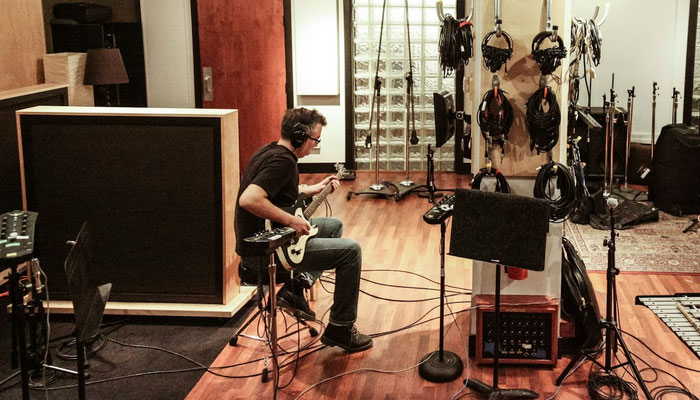
3D audio refers to a category of audio systems designed to simulate how sound exists and moves in real life. Instead of being limited to two channels, 3D audio places sounds around the listener in a full 3D space, allowing you to hear audio elements coming from above, below, behind, and anywhere in between.
At its core, 3D audio focuses on positioning sound sources accurately within a virtual sound field. Each sound is treated as an independent audio object rather than being locked to a specific speaker or channel. This allows sound engineers to precisely place different sounds within a scene, whether it’s footsteps behind you in a game or a helicopter flying overhead in a movie theater.
The goal is to create a convincing and immersive experience that feels natural to human perception. Instead of simply hearing audio, the listener begins to perceive sound as existing within a realistic environment. This results in a richer sound experience that more closely mirrors how we interact with the world in everyday life.
3D audio can be experienced through headphones, speakers, or a home theater system, depending on the implementation. When done correctly, it delivers high-quality sound that feels alive, dynamic, and deeply immersive.
How Does 3D Audio Work?
To understand how 3D audio works, it helps to understand how humans locate sound. Our brain analyzes subtle differences in timing, volume, and frequency response between our two ears. Factors such as head size, the shape of the ear canal, and even the listener’s head movement influence how we perceive sound directions.
One of the key concepts behind 3D audio is the head-related transfer function, sometimes referred to as head-related transfer. This is a mathematical model that describes how sound waves interact with the listener’s head, ears, and ear canal before reaching the inner ear. By applying this process digitally, audio systems can trick the brain into believing a sound is coming from a specific location in space.
In practical terms, sound engineers start by treating each audio element as a separate object. These audio objects are then placed within a virtual environment. The system calculates how each sound should reach the listener’s ears based on position, distance, and movement. This allows the listener to hear sounds as if they are coming from real directions rather than fixed speakers.
In speaker-based systems, such as surround sound or advanced home theater setups, multiple speakers are positioned around the room. A proper speaker setup allows sound to move fluidly across channels, creating a cohesive sound field. Formats like Dolby Atmos take this further by adding height channels, allowing sound to move vertically as well as horizontally.
With headphones, the system relies heavily on digital signal processing to simulate space. Even though the sound physically comes from two drivers, the brain is convinced that it exists all around the listener. This makes 3D audio especially popular for gaming and immersive music experiences.
Spatial Audio vs 3D Audio: Are They the Same?
The terms spatial audio and 3D audio are often used interchangeably, but they are not always identical. Understanding the differences helps clarify how these technologies fit into modern listening systems.
Spatial audio is a broader term that refers to any technique used to position sounds within a spatial environment. It focuses on how spatial audio works to give listeners a sense of direction, depth, and distance. This can include advanced stereo techniques, surround sound formats, and object-based systems.
3D audio is typically considered a more specific subset of spatial audio technology. It emphasizes full three-dimensional positioning, including height, and often relies on object-based audio rather than fixed channels. In this sense, all 3D audio is spatial, but not all spatial audio delivers true three-dimensional space.
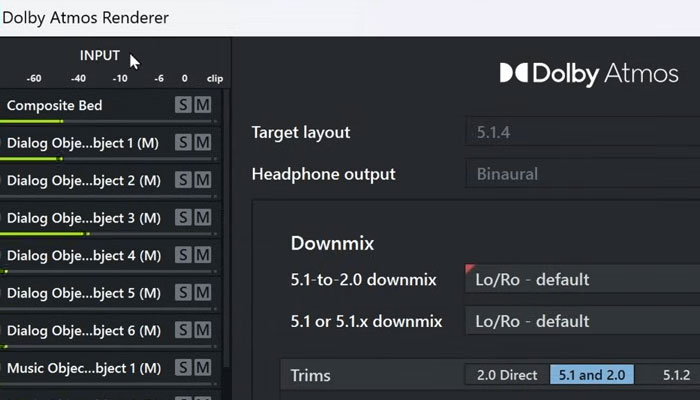
A good example is Dolby Atmos. While commonly described as both spatial and 3D, it specifically uses audio objects that can be rendered dynamically depending on the system. This allows the same mix to scale from headphones to a home theater with multiple speakers while still maintaining positional accuracy.
On the production side, sound engineers rely on professional tools to create and manage object-based mixes. Software such as Samplitude supports Dolby Atmos workflows and includes an integrated ADM editor, allowing audio objects and metadata to be edited directly within the project.

This makes it easier to prepare immersive mixes that translate accurately across different systems, from headphones to full home theater setups.
Services such as Apple Music have helped accelerate widespread adoption by offering immersive music mixes that support Dolby Atmos support on compatible devices. This has introduced millions of listeners to immersive listening without requiring complex hardware.
Ultimately, the difference comes down to precision and depth. 3D audio aims for a more lifelike sense of space, while spatial audio can include a range of approaches with varying levels of realism.
Final Words
3D sound represents a fascinating technology that is reshaping how we interact with sound. By moving beyond stereo and fixed channels, it allows us to hear and perceive sound in a way that aligns more closely with real life. Whether experienced through headphones, speakers, or a full home theater system, it offers a level of immersion that was once reserved for high-end movie theaters.
For movies, it enhances realism and emotional impact. For gaming, it provides a competitive advantage by improving perception and awareness of different sounds in the environment. For music, it opens the door to immersive music experiences that place the listener inside the performance rather than in front of it. Only when paired with the right hardware can users take full advantage of what 3D audio has to offer.
As technology continues to evolve, we can expect 3D audio systems to become more accessible, more personalized, and more dynamic. Improvements in processing power, better modeling of the listener, and smarter system integration will push audio toward peak performance across all platforms.
This shift marks the future of listening—one where sound is no longer flat, but alive, responsive, and deeply connected to space, life, and the world around us.
FAQ
Is Dolby Atmos the same as 3D audio?
No, Dolby Atmos is not the same as 3D audio, but it is a type of 3D audio technology.
3D audio is a broad concept that describes sound placed in a three-dimensional space around the listener, while Dolby Atmos is a specific system that achieves this by using object-based audio and dynamic rendering across different setups, from headphones to home theater systems.